Articles & Videos
How to support students' spelling skills every day – with Student Charts
Categories

Subscribe to our newsletters
Receive teaching resources and tips, exclusive special offers, useful product information and more!
Back to Research & Case Studies articles & videos
How to support students' spelling skills every day – with Student Charts
Sound Waves Literacy 5/5/26
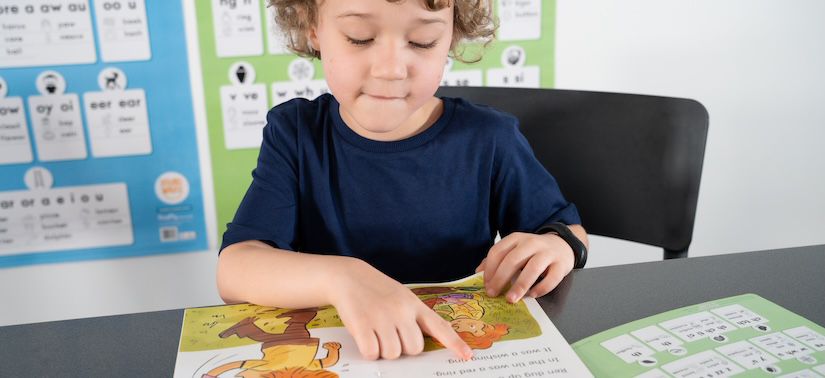
The Sound Waves Student Charts are an incredibly valuable (and often underrated) reference tools to support students’ orthographic mapping skills.
They can be used daily! Both within your dedicated Sound Waves lessons and across other learning areas as part of students’ everyday writing.
We’ll break down the features of the charts and outline different ways they can support students with their grapheme choice and general building of important phoneme–grapheme knowledge.
How are the charts structured?
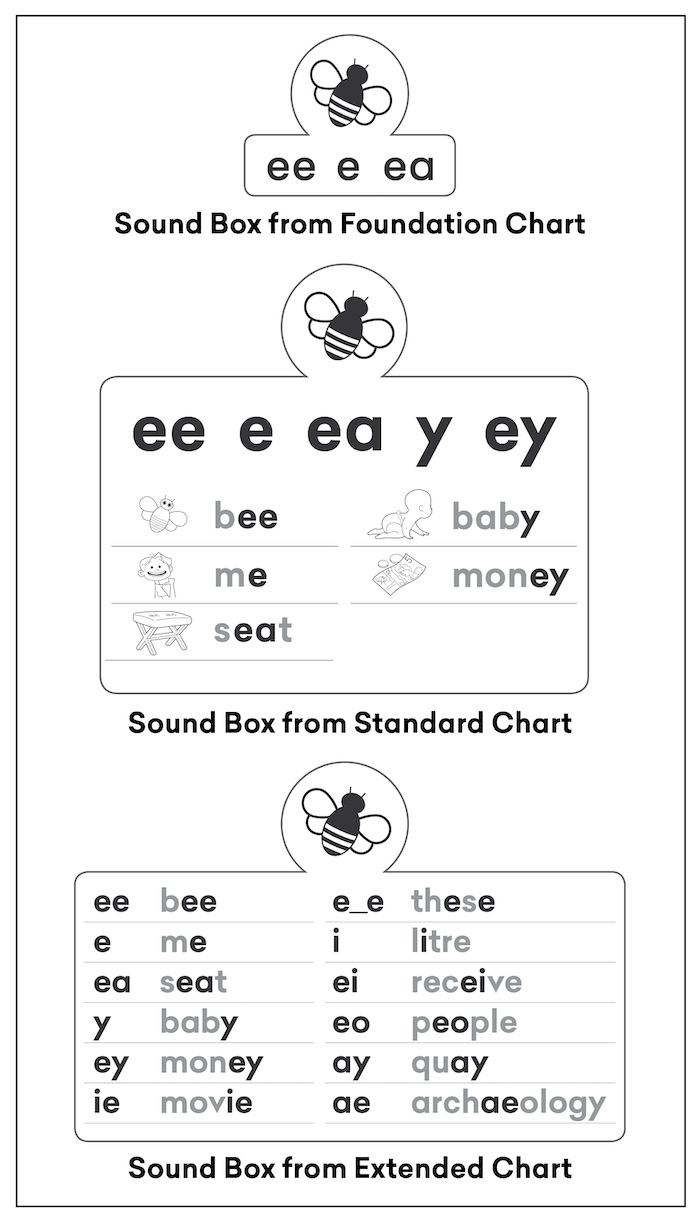
Student Charts are available in three versions Foundation, Standard and Extended to suit students throughout their primary schooling years.
All charts feature a Sound Box for each of the 43 phonemes (sounds) of Australian English and their common graphemes. The Standard and Extended Student Charts also include word examples.
The complexity of graphemes increases across the three versions:
- Foundation charts only include the graphemes taught in the Foundation program
- Standard charts feature common graphemes with word examples and are suitable for Years 1–6
- Extended charts feature more unusual graphemes with word examples that students will encounter in upper primary.
Ways the charts can be used by students
To help spell difficult words
Students can use their chart to tackle spelling difficult or unfamiliar words independently, right in the moment they need it.
Imagine you’re in a science lesson and your class is writing up a procedure for a rocket experiment, but a student is struggling with the igh for /i_e/ in flight. Instead of turning to you, they could use their chart — think of the phoneme they’re trying to represent, then locate the relevant Sound Box to explore the different graphemes that can represent that sound.
When students get into the habit of thinking of the phoneme first and consulting the chart for common grapheme options, difficult or unfamiliar words become far less daunting and they gain the agency to explore different grapheme choices with confidence.
To correct misspellings
Students can also use their chart to independently correct misspelled words.
Imagine your class is completing a maths investigation which requires them to design a surfboard with a geometric pattern and describe the shapes and angles they used. You notice they’ve misspelled jeometric. Instead of correcting the word for them, you could circle the ‘j’ and ask them to find the Sound Box on the chart and consider which alternative grapheme may be the correct choice.
This helps students build the habit of thinking critically about phoneme–grapheme relationships and reinforces the mapping skills they develop when they are reviewing and fixing their own mistakes.
To help with reading
Students can use their chart to explore phoneme–grapheme relationships and better understand how words could be pronounced when reading. For example, a student might be reading a sentence that reads ‘wind up the clock’. Initially they may read it as ‘wind’ meaning ‘breeze’ before realising it doesn’t make sense. They can then use their chart to find that the grapheme i can represent the phonemes /i/ as in igloo, /i/ as in ladder and /i_e/ as in ice-cream and determine which phoneme is appropriate.
To play games
While charts provide a valuable reference tool in students everyday writing and reading, don’t forget you can also integrate a range of fun and engaging games using the Student Charts, and the matching Teaching Charts.
For example, you could have your students play ‘Category Chain’. Start by choosing a broad category such as ‘food’. Ask the first student to think of a word that contains the first sound box on the chart – /b/ as in balloon, for example ‘banana’. Ask the next student to do the same thing with the next sound box – /k/ as in kite. Continue around the class until everyone’s had a go. Encourage students not to use any of the word examples from the chart!
Playing these games throughout the week will not only strengthen students’ phoneme–grapheme knowledge, but also reinforce the habit of reaching for their Student Charts independently when reading and spelling. For more game ideas, check out our article: Strengthen literacy skills with these four small-group games using Student Charts .