Sound Waves Early Literacy (F–2)
Decodable Readers are essential to reading success
Students use the Sound Waves Decodable Readers to apply the phoneme–grapheme knowledge learned in each lesson directly to reading practice.
Available as physical books or as eReaders.
Why Sound Waves Decodable Readers?
Learning to read is a complex process. Evidence-informed frameworks, such as the Simple View of Reading and Scarborough’s Reading Rope, identify that learning to read requires two key components of instruction – word recognition and language comprehension.
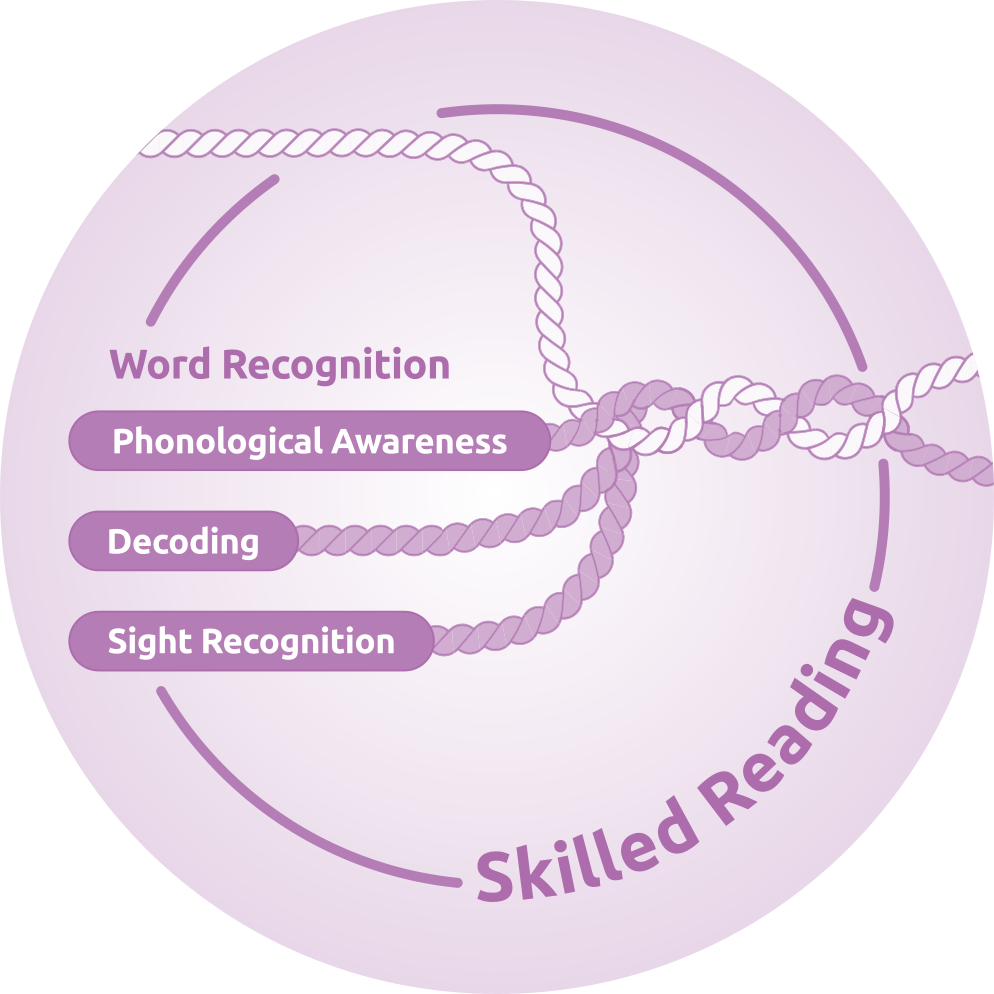
Sound Waves Decodable Readers develop word recognition skills, making them an essential resource for a student’s reading development in Foundation and Year 1. Additionally, Year 2 students can continue to use the books for extra reading support.
Our Decodable Readers have been written within tightly controlled parameters that adhere to the Sound Waves systematic synthetic phonics sequence. The books provide students with opportunities to apply their knowledge of each phoneme–grapheme relationship in continuous, meaningful texts. Over time, this leads to rapid and accurate word recognition and improves reading fluency.
Sound Waves Decodable Readers stand apart from other readers. Not only do they match the lesson sequence in Foundation and Year 1 making them fully decodable, they also feature captivating stories and illustrations. Best of all, there’s a Support, Core and Extended book to choose from in each unit!
A systematic sequence
Consistent with Sound Waves lessons
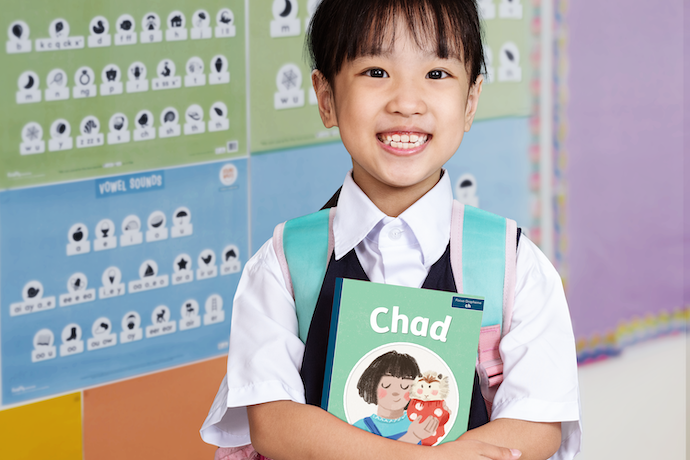
Sound Waves Decodable Readers follow the Sound Waves systematic synthetic phonics sequence. Every book has been written to frequently include the focus phoneme–grapheme relationship taught in the corresponding lesson. This means students apply what they’ve just learned to scaffolded reading practice.
To see where the Decodable Readers are embedded into the Foundation and Year 1 programs, view the Sound Waves Early Literacy Scope and Sequence.
Teach, model, apply
Targeted reading instruction
Frequent and targeted reading practice using decodable texts is a must in every Foundation and Year 1 classroom. With Sound Waves Early Literacy resources, all the bases are covered!
Teach using synthetic phonics lessons
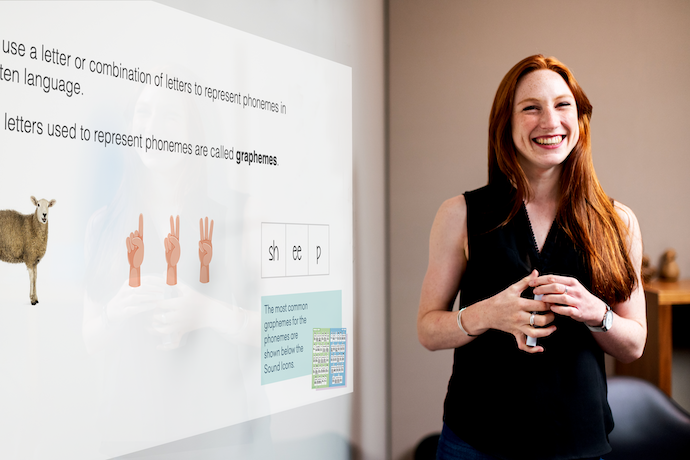
Use the online teaching resources to deliver your Sound Waves lessons and explicitly teach phoneme–grapheme relationships and introduce any Special Words featured in the Decodable Readers.
Model with projectable Decodable Readers
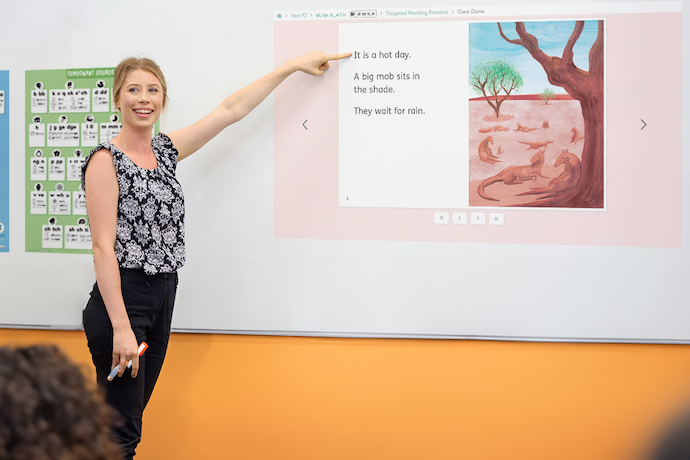
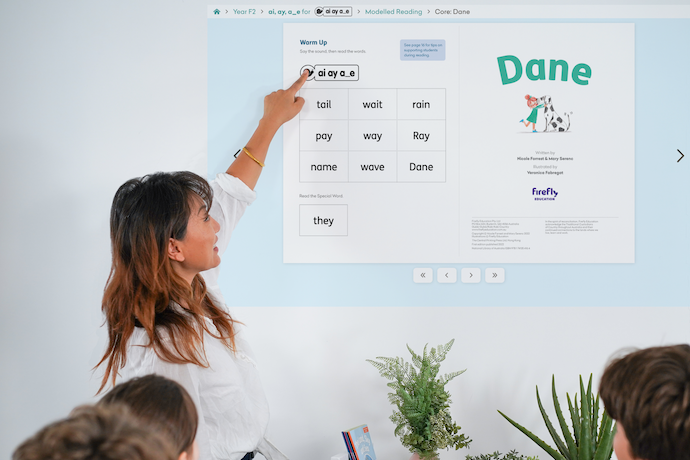
Use the projectable Sound Waves Decodable Readers and accompanying teaching notes to model reading to the class. Watch a modelled read demonstration or read our article for practical strategies to conduct effective modelled reading.
Apply to independent reading practice
Have students apply their phoneme–grapheme knowledge to independent reading practice using the class sets of Sound Waves Decodable Readers (or eReaders). Each unit has a Support, Core or Extended book to choose from. Select the relevant level for each student depending on their reading ability.
Read our How to use guide for more information about using the Sound Waves Decodable Readers with students as part of your weekly literacy lessons.

Three levels of difficulty
Independent reading success for every student
Differentiation is one of the stand-out features of the Sound Waves Decodable Readers. Available in three levels of difficulty, our Decodable Readers ensure a positive and successful reading experience for all the students in your class.
For each focus phoneme covered in the Foundation and Year 1 sequence there is a Support, Core or Extended book to choose from.
- Support books are suited to students who need to build confidence with their reading and would benefit from starting with simpler, shorter texts.
- Core books are ideal for the majority of students who can comfortably apply their new phoneme–grapheme knowledge to reading.
- Extended books are suited to more advanced students who need more complex texts to maintain their motivation and engagement.
And don’t forget, as the same sequence is taught in Years 1 and 2, it means Year 2 students can continue to to use any of the Year 1 books for additional reading practice – a convenient and seamless approach to build reading confidence where required.
Structured reading assessments
Evaluate students’ ability to read single words
The Foundation and Year 1 programs include Single Word Reading Assessments for both Regular Words and Special Words to administer each term.
Each assessment comes with detailed instructions explaining how to administer the test as well as marked samples and follow-up suggestions so you are equipped with the next steps to help students improve. There’s also a handy spreadsheet to capture students’ results.
Sound Waves Early Literacy also includes a suite of spelling assessments for Foundation to Year 2.
Read our assessment article for an in-depth breakdown of how Sound Waves assessments work for your year level.

The details that help spark a love of reading
With high-quality texts, clever illustrations, diverse themes and engaging activities, your students will love learning to read!
 High-quality, varied texts and diverse themes
Each book has been carefully written by literacy experts who set out to achieve a seamless blend of quality reading material, systematic instruction and unique stories to capture students’ attention.
You’ll find a range of different text types including traditional narratives, rhyming stories, clue books and more.
Your students will enjoy reading books that feature an eclectic range of themes – from animals and the environment, to emotions and fantasy! Best of all, the books feature current Australian settings and themes making them relatable to students.
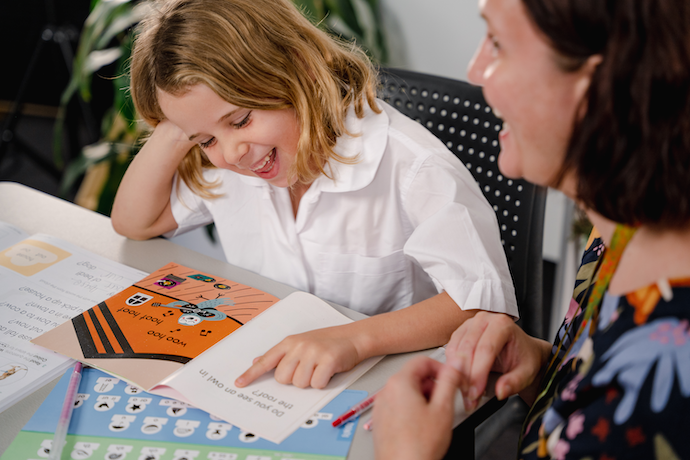
 Clever illustrations and clean layouts
Although the words are the main ingredient, the illustrations and page layouts are far from an afterthought!
We’ve partnered with a range of celebrated illustrators including Tom Jellett, Cheryl Orsini, Tonia Composto and Claudia Frittitta to create beautiful and engaging books.
Every illustration has been cleverly crafted to enhance the story and prompt discussion without enabling students to predict the text.
What’s more, the carefully selected font and considered page layouts help to reduce the cognitive load for students.
It’s this level of detail that will truly enhance the overall reading experience for your early readers.
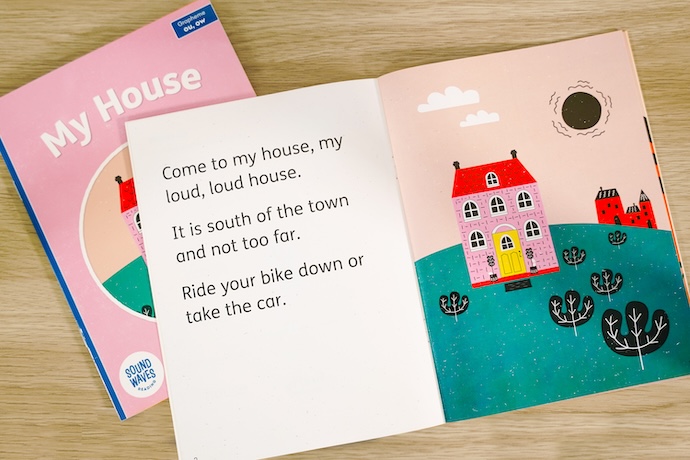
 Warm Up and discussion questions
From start to finish, the entire reading experience has been considered.
Use the Warm Up at the start of the book to introduce students to words that include the focus phoneme–grapheme relationship featured in the text. This allows students to practise reading words in isolation before attempting to read the words in the book.
Use the Book Chat questions at the back of the book as discussion prompts to help students engage with and reflect on what they are reading.
Plus, at the back of the book there are handy tips for helping students during the reading process – a useful feature for parents when it comes to home reading practice.
 Introductory Decodable Readers
The online teaching resources include a short sequence of Introductory Decodable Readers in the Foundation year. These fold-up printable books allow students to practise reading single words and simple sentences before attempting longer texts.
These Introductory Decodable Readers are the perfect stepping stone before students move on to practising reading using the Sound Waves Decodable Readers sets in subsequent units.
 Follow-on printable activities for every book
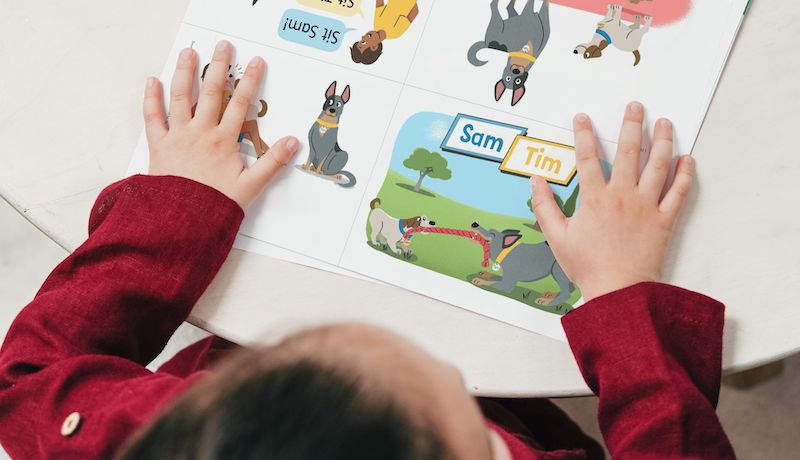
The online teaching resources include a follow-on activity for every Decodable Reader in the program – that’s right, every Support, Core and Extended book in Foundation and Year 1 has a printable activity!
These activities contain text and illustrations directly from the matching Decodable Reader. They’re an ideal post-reading activity, providing additional practice of the focus phoneme–grapheme relationship and any Special Words featured in the book. Teachers and students will enjoy the variety of activity types, including labelling, sequencing, match-ups, comprehension and writing – just to name a few!

Quality professional learning and support
Australia-wide workshops, articles and more
Ongoing professional learning is essential for consistent and successful implementation of instruction. Our team has a wealth of teaching experience and provides tailored professional learning opportunities to support you and your school throughout the year – at no extra cost.
Request a meeting or professional learning workshop for your school, register for one of our virtual workshops, browse our articles, or simply reach out to your local Education Consultant any time of the year with your questions.