Articles & Videos
What the 'Back to Basics' push means for your early years classroom in Western Australia
Categories

Subscribe to our newsletters
Receive teaching resources and tips, exclusive special offers, useful product information and more!
Back to Assessment articles & videos
What the 'Back to Basics' push means for your early years classroom in Western Australia
Maths Trek Sound Waves Think Mentals Writing Time 1/11/26
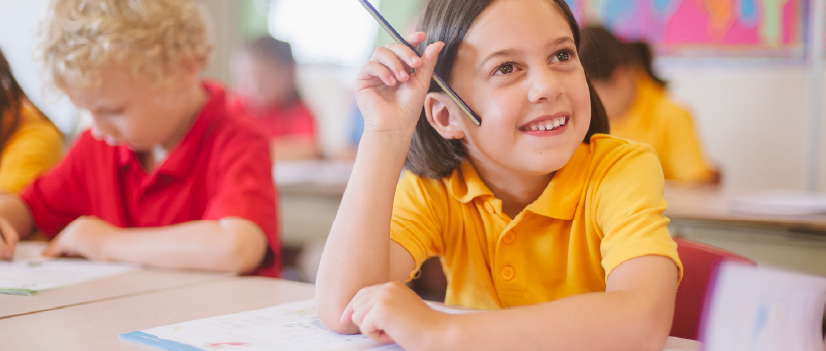
Western Australia is cutting unnecessary screen time in its youngest classrooms, as Premier Roger Cook and Education Minister Sabine Winton announce a ‘Back to Basics’ pilot across 10 public schools from the first day of the 2027 school year.
The six-month pilot focuses on students in Kindergarten to Year 2, with the aim of reducing unnecessary screen use and increasing face-to-face teaching and hands-on learning. Each school selected to participate in the pilot will receive $50,000 for materials.
WA isn’t alone in this shift away from students on devices. NSW and Victoria are also introducing classroom screen limits from 2027, and it’s all happening against a backdrop of Australia’s worst ever PISA results in maths and reading.1 Even NAPLAN is under the spotlight, with education ministers confirming a return to pen and paper testing.
Alongside the pilot, the WA Government has created a Digital Learning and Screen Use Advisory Group to help shape an evidence-based approach for every year level in its public schools. It’s a sign that this conversation is only just getting started, and that schools may want to start looking at how these changes could work across all year levels.
Whether you’re taking part in the pilot or simply keen to sharpen your practice and reduce students’ screen time, you need classroom resources you can trust and a clear plan for using them. Here’s what the pilot involves, what the research says, plus practical ways to cut back on screen use without adding to your workload.
Why is it particularly important in the early years?
As every early years teacher knows, a lot of development happens in those first years of school. Professor Hayley Christian from the Kids Research Institute says younger students feel the biggest impact from too much screen time. ‘The early years are so critical for setting them up for later life,’ she says, noting that screens replace active play, which supports physical, social and emotional development as well as learning.
Premier Roger Cook says screen use should be age appropriate and purposeful, because ‘we know the best early learning environments prioritise face-to-face interaction.’ Education Minister Sabine Winton, a former teacher of 27 years, says it’s about getting the balance right between technology and screen-free learning, so children can build their learning, wellbeing and ability to connect and collaborate with others.
Educators seem to be on board too. Leon Wilson, principal of Craigie Heights Primary School, told the ABC his school would be applying. He says screens at home haven’t helped literacy and numeracy development, and that schools need the right resources so students can build these skills without relying on devices.
While the focus of the pilot program and screen time reduction is on the early years, these discussions are also relevant through middle and upper primary – leading all educators to reconsider how much screen time should be present in their daily classroom practice.
What does the research say?
When students are learning their letters, the research indicates writing by hand seems to give them the edge. In a 2025 study, kindergarten students who learned new letters and words by hand did better than children who typed at naming and writing those letters, reading the words aloud and spelling them.2 The pattern holds across primary school too, with an Australian meta-analysis of 22 studies finding that students produced better quality writing by hand than on a keyboard.3
Then there’s the question of what sticks. Teaching a concept well is one job, and making sure students still remember it next week is another. The practice that follows the lesson is what makes the difference, and handwriting seems to help. Students who wrote stories by hand recalled more details than those who used a laptop or touchscreen,4 and brain imaging suggests writing by hand lights up broader, more connected networks than typing, the kind of activity linked to memory and learning.5 6
Does this mean no technology in the classroom?
No, governments are clear that technology still has a role to play. The time limits are aimed at students on individual devices, not at high-quality, essential teaching resources that facilitate explicit teaching.
Explicit teaching works best when it’s scaffolded, systematic and engaging, and digital tools are one of the best ways to ensure consistent and effective teaching takes place across all classrooms. Alongside modelling concepts by hand on a whiteboard, using projectable slides, videos and interactive tools can also help teachers model new concepts clearly and keep every student switched on during this important part of learning.
The new guidelines reflect this – WA’s pilot is clear that its restrictions do not apply to smartboards or interactive whiteboards. The goal is to reduce unnecessary student screen time, not to take effective, purposeful, explicit teaching off the screen at the front of the classroom.
What does a screen-limited early years lesson look like?
Even with fewer screens, best practice stays the same. Engaging, explicit instruction comes first, followed by hands-on application that lets students put their new knowledge to work.
Picture a maths or literacy block:
I do: You introduce and model a new phoneme–grapheme relationship, or new maths concept or problem-solving strategy. Use carefully curated lesson slide prompts that include videos or interactive tools where appropriate to best demonstrate the concept. The tools are there to enhance your teaching, not replace it.
We do: The class responds together, using mini whiteboards, choral responses or hands-on materials, while you check understanding.
You do: Students practise independently in their Student Books, forming letters and numbers, writing their own sentences or working through equations.
The first two steps are teacher led, and the screen, if you use one, stays with you. The last step is where every student puts pencil to paper – an essential part of the consolidation process, and where you see who needs more support.
How can schools reduce unnecessary screen time?
Whether your school is thinking of applying for the pilot or simply rethinking everyday classroom practice, a few small steps early on can make the change much smoother.
- Take stock: Where are devices used in Kindergarten to Year 2 because they’re easy, rather than because they’re the best tool for the job?
- Decide what moves to paper: Practice, consolidation and handwriting are natural candidates, since they’re where students benefit most from working by hand.
- Protect planning time: Choose ready-to-teach resources with plenty of hands-on activities, so replacing a screen task doesn’t mean increasing teacher workload or building something from scratch.
How does Firefly fit in?
Cutting back on screens shouldn’t mean hours spent creating activities from scratch. Our ready-made programs are built on best practice to help students succeed. Explicit teaching resources help you deliver clear, engaging lessons, and physical Student Books give every student a place to apply and consolidate what they’ve learned. Because the practice is hands-on and directly related to the lesson content, learning sticks without a screen in students’ hands.
We help schools get back to basics, with resources you can trust:
Sound Waves: Essential literacy and word study skills are taught explicitly, then consolidated through Student Book activities. Early years students also build their reading skills with sets of Decodable Readers. Hands-on supplementary resources keep lessons engaging – from printable games and worksheets to playing cards and handy phoneme–grapheme charts – providing plenty of ways for students to reinforce their learning. Download our Sound Waves Early Literacy (F–2) Sample Pack or Sound Waves Word Study (3–6) Sample Pack
Maths Trek: Maths concepts are taught explicitly, then consolidated through carefully curated Student Book activities. Hands-on lesson activities help students transition from concrete to abstract thinking. And investigations provide in-depth opportunities for hands-on application of mathematical concepts in real-world contexts, whether they are devising a cafe menu or planning a round-the-world trip. Download our Maths Trek Australian Curriculum Edition Sampler or Maths Trek NSW Syllabus Edition Sampler
Think Mentals: Mental computation strategies are taught explicitly, then practised in targeted Student Book activities that build mathematical fluency. The physical act of jotting helps students hold on to these essential skills, so what they learn sticks. Download our Think Mentals Student Book Sampler.
Writing Time: Writing Time builds the fine motor skills, precision and automaticity that allow students to put their thoughts onto paper quickly and freely. Plenty of explicit, engaging practice helps students form strong handwriting habits, making it a natural fit for screen-free classrooms.
Download our Writing Time Queensland Font Sampler, Writing Time NSW Font Sampler or Writing Time Victorian Font Sampler.
Whether or not your school is applying for the pilot, there’s no time like the present to start implementing a back-to-basics approach to lift your student outcomes. Contact your local Education Consultant today to learn how Firefly’s quality teaching resources and ready-made student book activities can work for your classroom.
References
De Bortoli, L, Underwood, C, Bertling, J 2026, PISA 2025: Reporting Australia’s results. Volume I: Student performance, Report, Australian Council for Educational Research, viewed 18 November 2026, https://doi.org/10.37517/978-1-74286-810-3↩
Ibaibarriaga, G., Acha, J. and Perea, M. (2025) ‘The impact of handwriting and typing practice in children’s letter and word learning: implications for literacy development’, Journal of Experimental Child Psychology, 253, article 106195. doi:10.1016/j.jecp.2025.106195.↩
Malpique, A.A. et al. (2024) ‘Effect sizes of writing modality on K–6 students’ writing and reading performance: a meta-analysis’, The Australian Educational Researcher, 51(5), pp. 2001–2030. doi:10.1007/s13384-023-00676-y.↩
Frangou, S.-M. et al. (2019) ‘The effect of writing modality on recollection in children and adolescents’, Research in Learning Technology, 27, article 2239. doi:10.25304/rlt.v27.2239.↩
Van der Weel, F.R. and Van der Meer, A.L.H. (2024) ‘Handwriting but not typewriting leads to widespread brain connectivity: a high-density EEG study with implications for the classroom’, Frontiers in Psychology, 14, article 1219945. doi:10.3389/fpsyg.2023.1219945.↩
Marano, G. et al. (2025) ‘The neuroscience behind writing: handwriting vs. typing, who wins the battle?’, Life, 15(3), article 345. doi:10.3390/life15030345.↩